

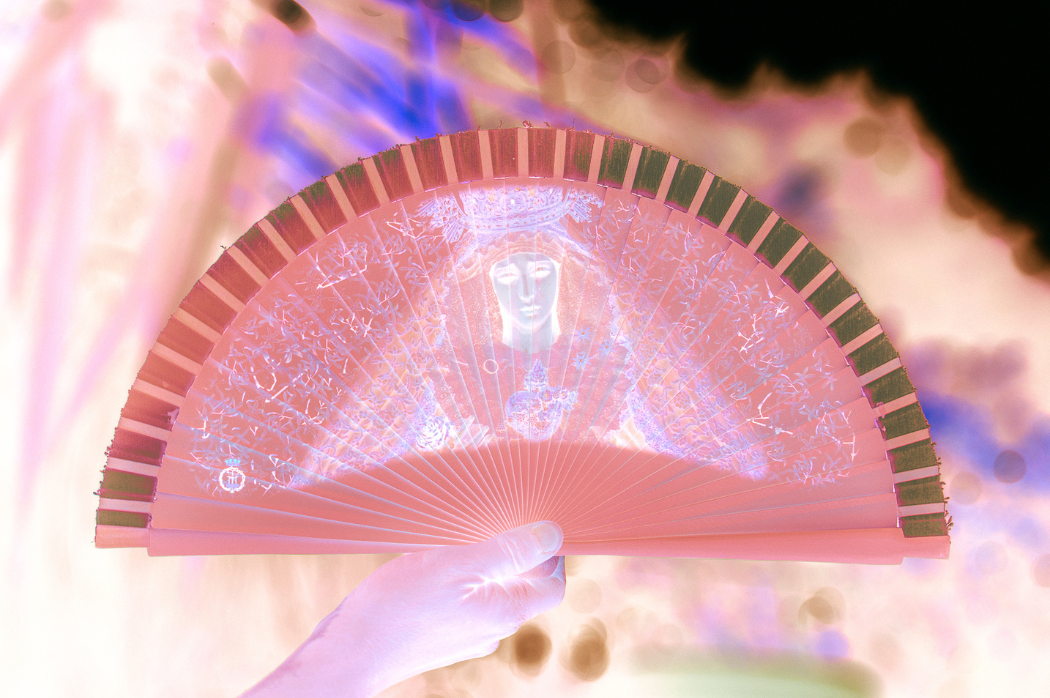
Art Residency oeil d’orphee with hans lucas agency
On dreams, presence, and the community of artists
There are projects that begin with a clear idea. And then there are projects that begin with uncertainty.
When I arrived for the Oeil Orphée residency with Hans Lucas agency, I had my project, Aimai-je un rêve, somewhere inside me. But I didn’t yet know how I was going to make it.
Everything around me was beautiful. The place, the light, the atmosphere, the details. It was almost too beautiful. I remember wondering: How do I create here? What do I bring into a space that already feels complete?
And then I understood that perhaps I didn’t have to.
Perhaps I could create another space entirely.
Ten artists, one temporary world
There were ten of us, each arriving with our own projects, our own questions, our own uncertainties.
We came together as artists, but slowly, something else began to happen.
We became a community.
There is something particular about being surrounded by people who understand the strange condition of trying to make something that doesn’t exist yet. Artists need artists. We need people who understand that sometimes you don’t know what you’re doing, that a project can disappear for a few days, that an image can take hours to make sense, or that one small detail can suddenly become everything.
During the residency, we were constantly supporting one another.
Sometimes it was a conversation over a meal. Sometimes it was looking at someone’s photographs. Sometimes it was simply sitting together and doing nothing.
And sometimes, it was 3 a.m.
We would knock on each other’s doors in the middle of the night to brainstorm, to ask a question, to show an image, to talk through an idea that had suddenly become urgent. There was no schedule for inspiration and no real separation between our work and our lives.
The conversations continued long after the working day was supposed to be finished.
We became each other’s first audience, first critics, collaborators, witnesses, and sometimes simply companions.
Somehow, the friendships became part of the work.
And I think this is one of the things I will remember most about the residency: not only what I produced, but the people with whom I was able to make, question, doubt, laugh, and dream.
Finding another way to create
When I arrived, I thought I needed to respond to the physical beauty of the place.
Instead, I started writing.
I have always written about dreams. Writing is a space I return to naturally, almost instinctively. So rather than forcing myself to photograph what was already in front of me, I began to construct something that could exist alongside it.
An alternative space.
A world of my own.
In Aimai-je — Un rêve, I wanted to step outside the usual position of the position of the photographer as someone who observes, records, or presents something that already exists.
For once, I wanted to simply be there.
Neither a presenter of the past nor a projection of the future.
Just there. Present.
The residency gave me the freedom to make this shift.
An alternative world
The images became a way of entering a world that did not have to obey the rules of ordinary reality.
A world built from fragments of dreams, writing, memories, sensations, imagination, and the freedom of being temporarily somewhere else.
I was not interested in reproducing the residency as it looked. I was interested in what it allowed me to imagine.
The photographs became spaces where reality could bend. Where something remembered could coexist with something invented. Where a feeling could become a place. Where a dream could become an image without having to explain itself.
The title Aimai-je un rêve asks a question: Did I love a dream?
But during this residency, another question slowly appeared beneath it:
What does it mean to be present?
Perhaps I had spent so much time looking backward or forward that I had forgotten the possibility of simply inhabiting the present moment.
The project became a way of making that space visible.
Artists need artists
There is a romantic idea of the artist working alone.
Alone with a camera. Alone with a blank page. Alone in a studio, waiting for something to arrive.
But this residency reminded me that the opposite can also be true.
Artists need artists.
We need the person who says, What if you try this?
We need someone to look at an image when we can no longer see it clearly.
We need someone to stay awake at 3 a.m. and listen to an idea that may make no sense yet.
We need friendship.
We need generosity.
We need other people to remind us that uncertainty is not failure, and that sometimes a project needs to wander before it finds its form.
The ten of us arrived with individual projects.
We left with traces of one another.
Ideas crossed between rooms. Conversations entered photographs. Friendships became part of our memories of the work. The boundaries between my project and our experience became less rigid.
That, for me, is also what an artistic residency can be.
Not simply a place where artists produce.
A place where artists hold space for one another.
A dream that belongs to the present
Looking back at Aimai-je un rêve, I realize that the project is inseparable from the residency itself.
The alternative world I created through photography came from the need to find a place where I could simply exist. But that place was also being created around me by the other artists.
For a brief period, we built our own small universe.
We worked, we talked, we questioned, we laughed, we knocked on doors at impossible hours, we shared our doubts and our discoveries.
And somewhere inside that collective experience, I found my own way into the work.
Aimai-je un rêve became less about recreating a past or imagining a future, and more about allowing myself to inhabit an uncertain present.
To make a world instead of documenting one.
To dream while awake.
To be neither the presenter of what has been nor the prophet of what will be.
Just here.
Just there.
Just for once, present.
And perhaps this is what the residency gave me above all: the permission to be there—not alone, but among other artists who were also trying, searching, dreaming, and becoming.
The photographs are mine.
But the world that allowed me to make them was ours.